

The relationship we have with you, our parents, is our top priority. Our partnership will help ensure your student is successful in and out of the classroom. Listed below are the tools your school will use to keep you up-to-date, informed and engaged in the day-to-day work of your student.
In addition, we want to hear from you! We believe it is important to have two way communication and encourage you to reach out and let us know what you have questions about, how we can help or ideas of how to improve your experience.
This is a tool to help you know who to contact for the specific issue you are trying to address. We commit to a 24 hour response rate and want you to feel you are connecting with the best person to answer your questions. If you do not receive one, please reach out to the campus Academic Counselor. Here is an example of what it may look like:
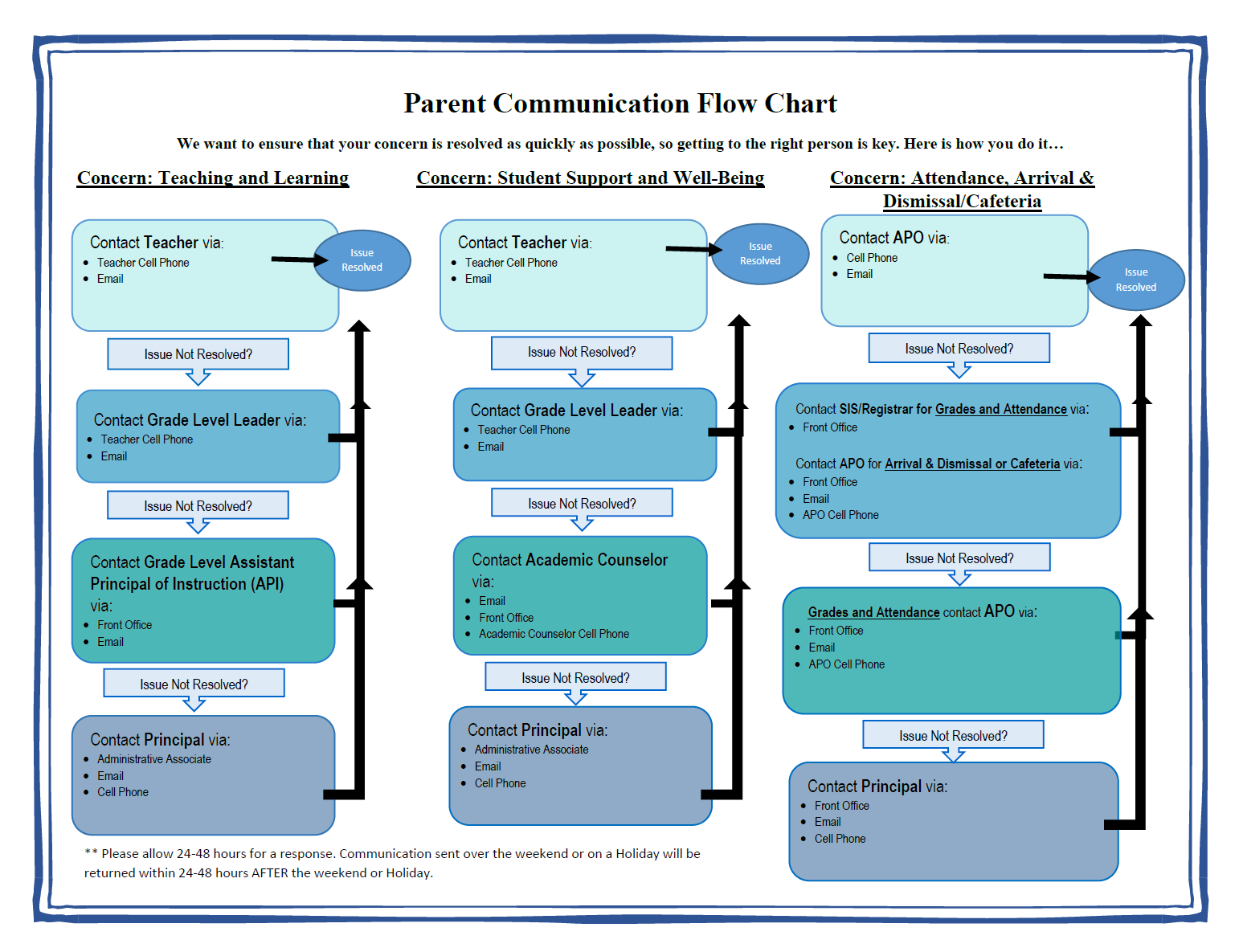
Click the image to expand!

Remind is a communication platform that allows the school to communicate with you and for you to use to communicate with the school staff. We utilize this app between the hours of 7am-7pm. We are committed to a 24-hour response rate. Please use this app to connect with campus staff via text or phone call. Please expect to receive more information regarding Remind as we get closer to the 25-26 school year.
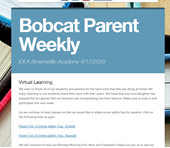
Every school will share a weekly newsletter with you called the Family Weekly. If you do not receive this, please contact the campus School Counselor. This newsletter is shared electronically via Remind. Please expect to receive a Family Weekly when the 25-26 school year begins. Here is a picture of what a Family Weekly looks like:
Follow us on social media! To remain up-to-date on IDEA’s latest and greatest news, we encourage you to follow us on our national Facebook and Instagram pages. We also encourage you to follow your campus’ Facebook for specific campus related news and highlights.
To help our IDEA families to get more comfortable with the IDEA culture and our frequently used terms, we have created this IDEA Glossary of Terms sheet! In no time, you will be using these terms on your campus and with your scholar!
IDEA Public Schools receives federal Title I funding to help ensure that every student (no matter their background) has access to a high-quality education. Title I supports our efforts to strengthen instruction, provide additional academic resources, and engage families as active partners in their child’s learning.
As part of this program, each campus develops a School-Parent Compact and Family Engagement Policy that outline shared goals for student achievement and family involvement. Families are encouraged to review these documents and participate in meetings and events that shape how Title I funds are used at their child’s school.
For more information, please review the attached documents below in English and Spanish.
The McKinney-Vento Homeless Assistance Act defines homeless children and youth as individuals who lack a fixed, regular, and adequate nighttime residence. This definition includes those sharing housing due to loss or economic hardship, living in motels, hotels, or shelters, or those with a primary residence in a public or private place not designed for regular sleeping.
Key Components of the McKinney-Vento Definition:
Resources:
Contact your campus School Counselor, Social Worker, or Principal for questions or support.